Seacamp's Science ProgramsSeacamp, click on image to enlarge

Seacamp's tropical marine location in the lower Florida Keys enables it to offer a truly unique marine science program. This program is the heart of Seacamp and makes available to campers and young scientists a variety of coordinated activities under t he guidance of academically-trained marine science instructors. In addition to being under the direction of degree-holding biologists, geologists and oceanographers, the marine field trips over water are carefully guarded by certified lifeguards. The activities of the Marine Science Program, as well as all other Sea camp programs, meet strict safety requirements.

Campers are able to discover for themselves the fascinating, little-known world beneath the ocean surface and the delicate relationships which unite all marine organisms in endless cycles of life and survival. Students can work at their own level of interest, learning basic ecological principles and concepts that are pertinent to the future of our natural resources as well as the study of marine science. Designed to appeal to all campers, the comprehensive Marine Science Program is coordinated in a number of course offerings which are selected each summer according to the responses shown by campers during the previous summer.

General Marine Sciences: a general survey of all phases of marine science, a basic course for campers with little background knowledge, as well as for younger campers.

Marine Communities: the study of animals and plants as they relate to each other on a community level. The campers learn by seeing the different areas and the type of life supported there. Areas are also studied on a microscopic community level which opens up a whole new world not seen by the naked eye. Animal Behavior: studies of the habits and behavior patterns of local marine animals, such as color changes in fishes, feeding habits, schooling, day and night behavior, relationships between organisms, reproduction, and symbiosis.


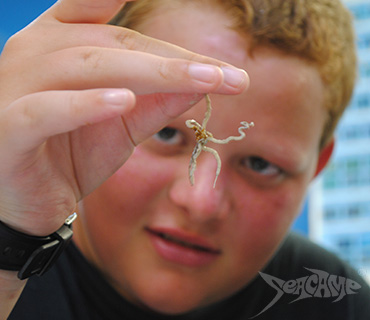
Marine Invertebrates: a survey of animals without backbones which inhabit the tidal flats, Seacamp, click on image to enlargeoffshore coral heads, and the variety of other habitats around Seacamp. The tropical marine environment is well known for its amazing diversity of invertebrate types, including sponges, starfish, corals, sea fans, crabs and numerous others.

Marine Botany: field studies of marine and terrestrial botanical areas, including the pine thatch, hardwood hammock, and mangrove community. Marine plants and algae are observed, collected, identified, and pressed. Edible plants may be sampled.

Marine Vertebrates: a survey of marine animals with backbones; encompasses not only fish but also birds and sea mammals.

Marine Geology: a study of the formation of the Florida Keys, studies of ancient reefs, rock formation, tidal areas, living coral reefs, sediment transportation and water tables. Man And The Sea: a study of the principles of pollution and ecological imbalances put forth by man and their effects on the worlds oceans. Also included will be utilization of marine resources (physical and chemical), fishing, shrimping and mariculture .

Marine Aquaria: an introduction to the basic operations of saltwater aquaria. Topics range from set-up and maintenance of the tank to collecting techniques for fish and invertebrates. The operation of large commercial systems is also covered.

Advanced Studies: activities designed for campers interested in scientific research combinedSeacamp, click on image to enlarge with a little hard work! Courses include Marine Physiology, Experimental Methods, Canal Studies, Quadrant Studies, Independent Studies, and underwater field-research utilizing S.C.U.B.A. (Advanced Diver Certification required). By arrangement with the science staff, a camper can pursue an independent research project of his own determination and offer the final data and conclusions for publications in conjunction with Seacamp. Such camper publications will be used by instructors and students in the future.

Seacamp science instructors realize the need for careful protection of our valuable natural resources. Wise conservation practices and a respect for the marine environment are at the core of the philosophy and actions of the Seacamp science program. All science activities include studies in the laboratory and in the field. Each camper will receive a Seacamp Certification describing the courses completed.


Home | Contact Us

©2001 Seacamp Association, Inc. 1300 Big Pine Ave. Big Pine Key, FL 33043

Toll Free 1-877-SEACAMP | Local (305) 872 - 2331

All rights reserved.